

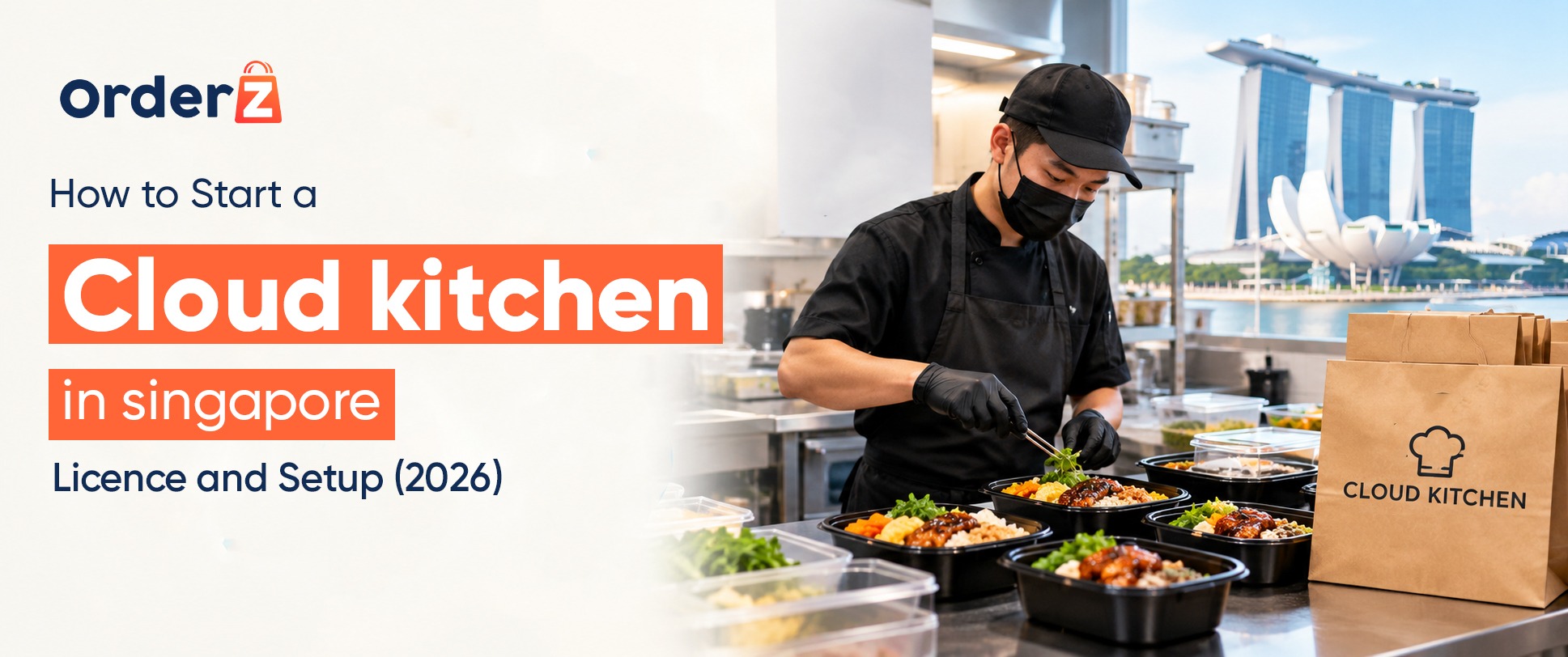
How to Start a Cloud Kitchen in Singapore: Cost, Licence and Setup (2026)
A cloud kitchen in Singapore allows you to run a food business without a traditional restaurant, dining area or front-of-house staff. Instead, you prepare food in a suitable commercial kitchen and sell it mainly through delivery and takeaway orders.
This model can help food entrepreneurs test new concepts and reach customers without investing in a full dine-in restaurant. However, you still need to plan your kitchen, licensing, operating costs, food safety and marketing carefully.
In this guide, you will learn what a cloud kitchen is, how much it may cost to set up, which licences you may need and how to attract customers in Singapore.
Key Takeaways
- A cloud kitchen prepares food primarily for delivery and takeaway without a customer dining area.
- Cloud kitchens are also known as ghost kitchens or dark kitchens.
- You generally need the appropriate Singapore Food Agency (SFA) licence for your commercial food operation.
- Your options include renting your own kitchen, using a shared kitchen or operating a central kitchen.
- Delivery platforms can help you reach customers, while direct online ordering can support repeat business.
- Check licensing, premises suitability and setup costs before signing a rental agreement.
What Is a Cloud Kitchen?
A cloud kitchen is a commercial food preparation facility that serves customers through delivery and takeaway rather than dine-in service.
Customers can discover your menu through food delivery platforms, your website or social media. After receiving an order, your team prepares and packs the food for collection or delivery.
A cloud kitchen is also commonly called a ghost kitchen or dark kitchen.
Some businesses operate a single food brand, while others run multiple brands from one kitchen. For example, the same kitchen might prepare rice bowls under one brand and desserts under another, provided the setup, food preparation and licensing arrangements permit it.
Cloud Kitchen vs Traditional Restaurant
Rental and setup costs: A cloud kitchen does not require a customer dining area or prime retail shopfront. However, commercial kitchen rent, equipment, ventilation and compliance costs can still be substantial.
Staffing: Without dine-in service, you may not need servers or a front-of-house team. You still need enough staff to prepare, pack and manage orders safely.
Customer acquisition: Customers cannot discover your business by walking past a storefront. Your menu, food photography, customer reviews and online marketing become especially important.
Business model: A cloud kitchen can help you test a focused menu, but competition on delivery platforms and their commissions may affect your profit margins.
Three Ways to Set Up a Cloud Kitchen in Singapore
Before launching your food brand, compare the three common kitchen models.
1. Rent and Build Your Own Kitchen
With your own kitchen, you lease a suitable unit and arrange the equipment, storage, ventilation and other facilities needed for your operation.
Advantages:
- Greater control over the kitchen layout and daily operations.
- More flexibility to develop your own processes.
- Potential to expand production as demand grows.
Challenges:
- Higher initial investment.
- Rental deposits, equipment and renovation expenses.
- More responsibility for ensuring that the premises meet applicable requirements.
This option may suit entrepreneurs who have a clear business plan, sufficient capital and confidence in their expected demand.
2. Use a Shared Commercial Kitchen in Singapore
A shared kitchen allows multiple food businesses to use a commercial kitchen facility under an agreed rental arrangement. Searching for a commercial kitchen for rent in Singapore can help you compare facilities, rental terms and available equipment.
Advantages:
- Potentially lower upfront costs.
- Less need to invest in a complete kitchen fit-out.
- An opportunity to test a menu before committing to a long lease.
Challenges:
- Limited access during busy periods.
- Shared equipment and storage arrangements.
- Rental terms, operating hours and permitted activities may vary.
Before signing a contract, confirm who holds the relevant licence, which activities you are allowed to conduct, and what responsibilities remain yours. Do not assume that a kitchen operator’s existing licence automatically covers your business.
For many first-time entrepreneurs, a shared kitchen is worth investigating before investing in a dedicated facility.
3. Operate a Central Kitchen
A central kitchen typically prepares food in larger quantities for several outlets, brands or distribution points.
This model may suit an established food business that needs consistent production across multiple locations. It can involve more complex logistics, staffing, storage and regulatory considerations.
Check the applicable requirements with SFA before deciding whether this model suits your business.
Cloud Kitchen Licence and Rules in Singapore
Understanding the rules is essential before investing in a cloud kitchen in Singapore.
SFA Food Shop Licence
A delivery-only business is not automatically exempt from food licensing requirements. If you prepare and sell cooked food from a commercial kitchen, you generally need the appropriate SFA licence for your operation.
According to the SFA’s official licensing information, a Food Shop Licence costs S$195 and is valid for one year. Confirm the requirements that apply to your business before budgeting or applying.
The application process includes submitting an application and kitchen layout plan, a review of the application and layout, pre-licensing inspection checks, and final approval. Requirements depend on the type of food business and premises.
Useful official resources:
- SFA: Application Process and Licence Fees
- SFA: Requirements for Food Retail Licences
- SFA: Food Shop Pre-Licensing Self-Checklist (PDF)
Review the latest application instructions before making commitments.
Food Hygiene and Training
Food safety must be part of your daily operations. Depending on the roles and applicable requirements, food handlers may need to complete the relevant food safety training.
Establish clear procedures for:
- Cleaning and sanitising food preparation areas.
- Storing ingredients at suitable temperatures.
- Preventing cross-contamination.
- Managing allergens and food handling.
- Packing orders safely for delivery.
- Maintaining appropriate hygiene records.
Confirm the training requirements that apply to your staff and operation with SFA or an approved training provider.
Check the Premises Before Signing a Lease
Finding a kitchen unit is only one part of the process. The premises must also be suitable and approved for the intended use.
Before paying a deposit or signing a long-term lease, check:
- Approved use: Confirm that the premises can legally be used for your intended food preparation activities.
- Ventilation and exhaust: Ensure that cooking fumes and smells can be managed through an appropriate system.
- Drainage and grease management: Confirm that the necessary facilities are available.
- Electrical and gas supply: Check that the unit can support your planned cooking equipment.
- Fire safety: Confirm the applicable requirements with the relevant authorities.
- Landlord conditions: Make sure the landlord permits the intended use and any necessary installation work.
Depending on the premises, you may need to check requirements with the Urban Redevelopment Authority (URA), the Singapore Civil Defence Force (SCDF), the landlord and other relevant authorities.
A unit with unsuitable exhaust or fire safety arrangements could lead to costly delays. Verify the requirements before committing to the property.
Cloud Kitchen vs Home-Based Food Business
A cloud kitchen and a home-based food business are not the same.
Eligible small-scale home-based food businesses may operate under a different regulatory arrangement, subject to specific restrictions. A commercial cloud kitchen generally needs the appropriate licensing and premises approvals.
If you are still testing a small food business idea, read our related guide, How to Start a Home-Based Food Business in Singapore. Add the article’s final published URL to this link once the post is live.
Check the latest SFA guidance on food retail licensing to understand which rules apply to your proposed operation.
Business Registration and Taxes
You should also check whether you need to register your business with the Accounting and Corporate Regulatory Authority (ACRA).
Business income may need to be declared to the Inland Revenue Authority of Singapore (IRAS). Your reporting obligations depend on your business structure and circumstances.
If you sell food online, review the IRAS tax guide for online sellers and service providers.
If you establish a company, additional filing and compliance obligations may apply. Consider getting professional advice if you are unsure about your business structure or tax responsibilities.
How Much Does a Cloud Kitchen Cost in Singapore?
The cost of setting up a cloud kitchen in Singapore depends on your location, kitchen size, equipment, rental arrangement and menu.
Rather than relying on a single estimate, prepare a budget based on actual quotations for your proposed operation.
Main Cloud Kitchen Expenses
- Kitchen rental and deposit
Rent is one of the major ongoing costs. Compare dedicated kitchen units with shared kitchen rental arrangements, and check the deposit, minimum rental period and additional charges.
- Licence and business registration
Budget for the relevant SFA licence, business registration and any other approvals required for your operation. Verify current fees with the appropriate authorities.
- Equipment and kitchen fit-out
You may need cooking equipment, refrigerators, freezers, worktables, utensils, storage, ventilation and other facilities. Using a properly equipped shared kitchen may reduce your initial investment.
- Ingredients and packaging
Calculate ingredient costs, food wastage and packaging for each menu item. Delivery packaging should protect food quality and reduce the risk of leaks or spills.
- Staff and operations
Include wages, training, cleaning supplies and other operating expenses. Your staffing needs will depend on the menu, order volume and operating hours.
- Delivery platform commissions
Delivery platforms may charge commissions or other fees. Check the latest commercial terms for each platform and include those charges in your pricing calculations.
- Marketing and ordering tools
Set aside a budget for food photography, promotions, advertising and the systems you use to receive and manage orders.
- Working capital
Keep a cash reserve for the initial months while you build demand. Your business may take time to generate enough repeat orders to cover ongoing expenses.
How to Estimate Your Starting Budget
Create a simple budget with three categories:
- One-time costs: Equipment, fit-out, deposits and initial setup.
- Monthly costs: Rent, staff, utilities, software and marketing.
- Variable costs: Ingredients, packaging, delivery fees and platform commissions.
Then estimate how many orders you need each month to cover your expenses.
For example, calculate your average contribution per order after ingredients, packaging and order-related fees. Compare the total contribution with your fixed monthly expenses to estimate the sales volume required to break even.
This gives you a more useful starting point than looking at rental costs alone.
How to Start a Cloud Kitchen: Step-by-Step
Follow these steps to organise your launch.
Step 1: Test Your Food Concept
Research your target customers and identify what makes your food different. If possible, gather feedback on recipes, portion sizes and prices before investing in a dedicated kitchen.
Ensure that any testing or sales activity complies with the applicable food business requirements.
Step 2: Choose a Focused Menu
Start with a manageable number of dishes. Prioritise food that can be prepared consistently, packed efficiently and delivered without losing too much quality.
A smaller menu can also make ingredient purchasing, stock management and staff training easier.
Step 3: Select Your Kitchen Model
Compare a dedicated kitchen, a shared kitchen and a central kitchen. Consider your capital, expected sales, menu requirements and plans for expansion.
Step 4: Verify the Premises
Check approved use, ventilation, drainage, power supply, fire safety and landlord conditions before signing a lease.
Step 5: Complete Registration and Licensing
Check your ACRA registration obligations and apply for the relevant SFA licence and approvals. Allow time for the required application and inspection process.
Step 6: Prepare Your Operating Procedures
Train staff as required and establish processes for hygiene, storage, cleaning, order preparation and packaging.
Step 7: Set Up Your Ordering Channels
List your menu on suitable delivery platforms and establish a direct ordering channel where appropriate.
A website can help customers find your menu and business information without relying entirely on a third-party marketplace.
Step 8: Launch and Track Performance
Monitor sales, food costs, waste, order preparation time, customer feedback and profit margins. Review your numbers regularly and make changes based on actual demand.
How Do Cloud Kitchens Get Orders?
A cloud kitchen depends on online visibility and a smooth ordering experience. Without a storefront, customers need other ways to discover your brand and decide whether to place an order.
Use Food Delivery Platforms
Platforms such as GrabFood can help your business reach customers who are already looking for meals online.
To improve your listing:
- Use clear, appealing food photographs.
- Write accurate menu descriptions.
- Keep prices and availability up to date.
- Package orders carefully.
- Monitor customer reviews and feedback.
Remember to account for platform fees and promotional costs when setting prices.
Build Your Own Online Ordering Channel
Delivery apps can help you reach new customers, but relying exclusively on them may limit your control over customer relationships and increase your exposure to platform charges.
You can also explore direct orders through your website, social media and WhatsApp.
An online store can provide a central place to display menu items, prices and ordering information. Depending on the platform and its available features, it may also help you organise incoming orders.
Explore the OrderZ eCommerce Website Builder as one option for creating an online store. Compare its features, pricing and suitability for your business before choosing a solution.
Promote Your Cloud Kitchen on Social Media
Your food photographs and videos act as your online storefront.
Share content that helps customers understand what you offer, such as:
- Short videos of food preparation.
- Menu highlights and new dishes.
- Clear photographs of finished meals.
- Behind-the-scenes content about your brand.
- Genuine customer reviews shared with permission.
- Seasonal menus and pre-order announcements.
For more ideas, read our guide to using Instagram Reels to reach local audiences in Singapore.
Keep your menu, prices and ordering instructions easy to find. Make sure promotional offers are clear and that you can fulfil the orders they generate.
Is a Cloud Kitchen Profitable in Singapore?
A cloud kitchen can become profitable, but lower storefront costs do not guarantee success.
Your results depend on food costs, rent, order volume, pricing, staff productivity, platform charges and repeat business.
Common challenges include:
- Strong competition: Customers can compare many similar menus on delivery apps.
- Platform fees: Commissions and promotions may reduce the amount you retain from each order.
- Limited visibility: Without a storefront, you need to invest in online discovery and marketing.
- Delivery quality: Poor packaging or long delivery times can affect the customer experience.
- Inconsistent demand: Sales may fluctuate across days, seasons and promotional periods.
- Food waste: An oversized menu or inaccurate demand forecasts can increase ingredient waste.
To improve your chances, start with a clear food concept, control costs, track sales and encourage repeat customers. Review profitability by menu item rather than looking only at total revenue.
Common Cloud Kitchen Mistakes to Avoid
When starting a cloud kitchen in Singapore, avoid these common mistakes:
- Signing a lease before checking approved use and technical requirements.
- Assuming a shared kitchen’s licence automatically covers your business.
- Starting operations before obtaining the required licence.
- Offering too many dishes before understanding demand.
- Forgetting platform commissions when pricing meals.
- Spending heavily on equipment before testing the business concept.
- Using packaging that does not protect food during delivery.
- Depending entirely on delivery platforms for customer acquisition.
- Ignoring sales records, expenses and cash flow.
Careful preparation can help you avoid expensive changes and make more informed business decisions.
Frequently Asked Questions
What is a cloud kitchen?
A cloud kitchen is a commercial kitchen that prepares food primarily for delivery and takeaway, without a customer dining area. It is also known as a ghost kitchen or dark kitchen.
Do I need a licence to operate a cloud kitchen in Singapore?
You generally need the appropriate SFA licence to operate a commercial food business. The precise requirements depend on your business model and premises. Check the latest SFA licensing guidance before starting.
How much does it cost to start a cloud kitchen in Singapore?
Costs vary according to rent, equipment, kitchen size, licensing, staff, ingredients and marketing. Obtain quotations and prepare a budget covering setup expenses, monthly overheads and working capital.
Is a shared kitchen cheaper than renting my own kitchen?
A shared kitchen can reduce upfront costs because you may avoid a complete fit-out and some equipment purchases. However, compare rental fees, access hours, storage, contract conditions and licensing responsibilities before deciding.
Can I run a cloud kitchen from my HDB flat?
A commercial cloud kitchen and a small home-based food business operate under different arrangements. Do not assume that you can run a commercial cloud kitchen from an HDB flat. Check the applicable HDB and SFA requirements for your proposed activities.
Do I need to use food delivery apps?
No single platform is necessarily required for every business, but delivery apps can help you reach customers. You can also explore direct ordering through your website and social media, subject to the relevant requirements.
How can I get more orders for my cloud kitchen?
Use clear food photographs, a focused menu, accurate descriptions and reliable packaging. Promote your dishes on social media, encourage genuine customer reviews and consider creating your own online ordering channel to support repeat purchases.
Can an online store help my cloud kitchen?
An online store can give customers a central place to view your menu and find ordering information. The available ordering and payment features depend on the platform you choose. Explore the OrderZ eCommerce Website Builder and compare its features against your business needs.
Final Thoughts
Starting a cloud kitchen in Singapore can be a practical way to launch a delivery-focused food brand, but success requires more than a good menu.
Choose the right kitchen model, confirm the premises and licensing requirements, calculate your costs carefully and test demand before expanding. Once you launch, monitor your sales and margins while building visibility through delivery platforms, social media and direct ordering.
As your customer base grows, a suitable online ordering channel can help customers find your menu and learn more about your brand.
Planning to take your food business online? Explore the OrderZ eCommerce Website Builder to learn more about creating an online store for your business.
Official Sources
- Singapore Food Agency (SFA)
- Urban Redevelopment Authority (URA)
- Singapore Civil Defence Force (SCDF)
- Accounting and Corporate Regulatory Authority (ACRA)
- Inland Revenue Authority of Singapore (IRAS)
Regulatory requirements and licence fees can change. Confirm the latest requirements with the relevant Singapore authorities before making business decisions.